- Drive-thru oil changes
- No appointment needed
- Mobil 1 oils only
- Car wash on site

Differential Fluid Change
in Parsippany, NJ
Differential service with fresh gear fluid for the part of your drivetrain that lets the wheels turn at different speeds through every corner.
- Fresh differential fluid
- Cars, SUVs and trucks
- Preventive maintenance
- Call 973-335-3000 for pricing
Differential Fluid Change in Parsippany
A differential fluid change is part of the differential service we offer at Hogwash Oil Change Center, 1600 US-46 in Parsippany, NJ. It sits on our list of important system care, alongside the radiator flush and fill, serpentine belt inspection and wiper blade replacement, which together keep a car safe and reliable on the road.
The differential is easy to forget because it rarely announces itself. It works quietly under the car every time you turn, and it relies on a small amount of heavy gear oil to do that job. When that fluid is old, the gears inside run with less protection than they were designed for.
Our technicians handle routine maintenance with attention to detail and the latest equipment. The aim is the same as with every service we do: help extend the life of your vehicle and give you peace of mind every time you drive. Differential service starts at $99.99; the exact price depends on the vehicle and the fluid it calls for, so call 973-335-3000 with your year, make and model.
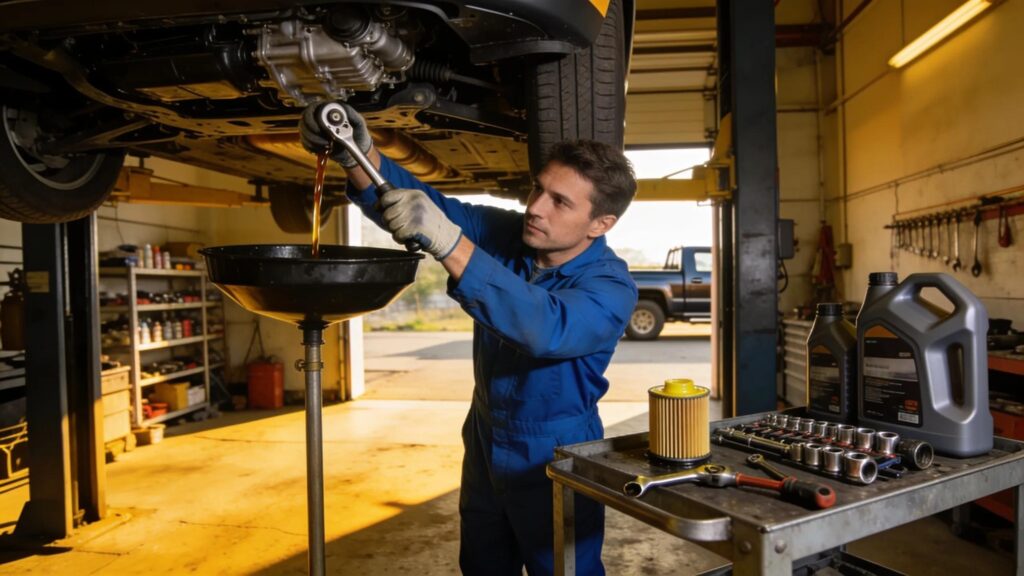
Differential Fluid Change Cost
Our differential service replaces the old fluid to reduce friction and prevent wear, for a smooth and reliable ride.
| Differential Service | Starting at $99.99 |
Prices as listed on our service menu. “Starting at” prices vary by vehicle, so call 973-335-3000 with your year, make and model for an exact number.
What Is Differential Service?
Differential service is maintenance on the differential, the gear assembly that splits engine power between two wheels on the same axle. In general, it means draining the old gear oil from the differential housing and refilling it with fresh fluid of the type your manufacturer specifies. Depending on the vehicle, the housing may have a drain plug, or the cover may need to come off.
People use a few different names for the same job: differential service, differential fluid change, gear oil change or rear-end service. On a front-wheel-drive car, the differential is often built into the transaxle and shares fluid with the transmission. On rear-wheel-drive, all-wheel-drive and four-wheel-drive vehicles, there is usually at least one separate differential with its own fluid.
Why Your Wheels Need a Differential
When a car turns, the outside wheel travels a longer path than the inside wheel, so it has to spin faster. If both wheels were locked together on a solid shaft, one of them would scrub and hop through every turn. The differential solves that with a set of gears that lets each wheel turn at its own speed while both still receive power.
Those gears mesh under heavy load, especially when accelerating, towing or climbing. The gear oil keeps a film between the teeth, carries heat away and keeps metal surfaces from wearing against each other. Everything about how smoothly that assembly works depends on the condition of that fluid.
Why Differential Fluid Wears Out
Gear oil does not burn off the way engine oil can, but it still breaks down. Heat from hard use thins it and weakens its protective additives. Tiny metal particles from normal gear wear build up in the fluid over time. Moisture can find its way into the housing through the vent, especially after driving through deep water.
The result is fluid that no longer cushions and cools the gears as well as it did when it was new. Because the differential is sealed and out of sight, most drivers never see the fluid, which is why it is a service item worth tracking on paper rather than waiting for a symptom.
How Often Is a Differential Fluid Change Needed?
There is no single answer. Intervals vary a great deal by vehicle, and some manufacturers list the differential fluid as a long-life fill while others give a specific schedule. Your owner’s manual is the place to look, and it often lists a separate, shorter schedule for severe service.
Severe service usually covers the kind of driving that puts extra load on the gears: towing a trailer, carrying heavy loads, frequent short trips, driving on dirt or gravel, or deep water crossings. If any of that describes how you use your vehicle, the shorter schedule is the one to follow. If you are unsure whether your differential has ever been serviced, call us and ask.
Signs Your Differential Needs Attention
A differential that needs attention can make itself known in a few ways. Common signs include:
- A whine or howl that changes with speed, especially when accelerating or coasting
- Clunking when you shift into drive or start moving
- Vibration that grows with speed
- A gear-oil smell, which is strong and distinctive
- Fluid spots under the rear or middle of the vehicle
These signs can have other causes too, and some point to wear that goes beyond a fluid change. If you notice any of them, have the vehicle looked at soon rather than waiting for your next scheduled service.
Differential Service for AWD, 4WD and Rear-Wheel Drive
How many differentials a vehicle has depends on its drivetrain. A rear-wheel-drive car or pickup usually has one at the rear axle. A four-wheel-drive truck or SUV typically has front and rear differentials, plus a transfer case. Many all-wheel-drive vehicles have front and rear differentials as well, and some have a center differential between them.
Each unit may take its own fluid, and some call for special additives or friction modifiers. That is why it helps to share your exact year, make, model and drivetrain when you call, so we can talk through what your differential service involves before you drive in.
Differential Fluid Change Near Me
If you are searching for a differential fluid change near me in Morris County, our shop is on US-46 in Parsippany, easy to reach from Route 46 and the surrounding towns. Our hours are Monday through Saturday, 8:00 AM to 5:00 PM.
Our convenient location also makes it easy to combine a visit with a Mobil 1 oil change or a trip through the car wash at the same location. Call 973-335-3000 before you come in so we can confirm the service for your vehicle.
Pairing Differential Service With Other Maintenance
The differential is one part of a drivetrain that has several fluids, and it makes sense to look at them together. A transmission flush handles the fluid that keeps your transmission shifting. A radiator flush and fill handles engine cooling. And the Mobil 1 oil change protects the engine itself, helping prevent engine wear and sludge.
Tires connect to all of this as well. Uneven tread wear can come from many causes, and a tire rotation helps the set wear more evenly. See the full list of services to plan what your vehicle needs.
Differentials Inside Front-Wheel-Drive Transaxles
Front-wheel-drive cars still have a differential, but it is usually built into the transaxle, the combined transmission and final-drive unit mounted at the front of the car. In many of these designs, the differential shares its fluid with the transmission, so servicing the transmission fluid also refreshes the fluid the differential gears run in. Some transaxles, however, keep the differential in a separate compartment with its own fill and drain plugs and its own fluid type.
That difference is easy to miss, and it is one reason to check the owner’s manual rather than assume. If your manual lists a separate final-drive or differential fluid, it has its own service schedule. When you call, tell us whether your car is front-wheel, rear-wheel, all-wheel or four-wheel drive, and we can talk through which fluids apply before you visit.
Differential Service Questions
Answers to the questions drivers ask most about differential fluid.
Draining the old gear oil from the differential and refilling it with fresh fluid of the type your vehicle requires.
No. They are separate systems with separate fluids, although on many front-wheel-drive cars the differential shares fluid with the transaxle.
It depends on the vehicle. Follow your owner’s manual, and use the severe-service schedule if you tow, haul or drive on rough roads.
Many do. AWD and 4WD vehicles often have front and rear differentials, and some have a center unit as well.
Often a whine or howl that changes with speed, or a clunk when starting to move. Have it checked soon if you hear either.
Differential service starts at $99.99. The exact price depends on your vehicle and its fluid; call 973-335-3000 with your year, make and model.
Monday through Saturday, 8:00 AM to 5:00 PM.
Differential Service for Morris County Drivers
Drivers come to our Parsippany shop from across the area, including Boonton, Hanover Township, Morris Plains, Pine Brook and Denville. See every town on our service areas page.
Find us on US-46 in Parsippany
1600 US-46, Parsippany, NJ 07054 · Mon–Sat 8:00 AM–5:00 PM
Time for differential service?
Call 973-335-3000 or drive in to 1600 US-46, Parsippany.